Real-World Prompt Calibration Examples and Workflows
Real-World Prompt Calibration Examples and Workflows
Last Updated: March 2026
Prompt Calibration is an emerging approach to improving how humans interact with artificial intelligence systems.
Large language models such as GPT, Grok, Claude, and Gemini generate responses based on the prompts they receive. Small differences in wording can lead to dramatically different results.
Prompt Calibration focuses on refining prompts so that AI systems produce more reliable, structured, and useful outputs.
By improving prompt clarity, structure, and depth, calibrated prompts allow users to interact with AI more effectively.
As artificial intelligence becomes more integrated into everyday work, prompting is becoming an essential skill.
Many users struggle with inconsistent outputs from AI systems because prompts are often written without structure or context.
Prompt Calibration addresses this challenge by providing frameworks and methods that improve the way prompts are written.
Instead of relying on trial and error, calibrated prompting helps users guide AI systems toward the intended result.
Prompting techniques are evolving rapidly as AI systems become more capable.
Early prompting practices were largely experimental. Over time, users began discovering patterns that produced better results.
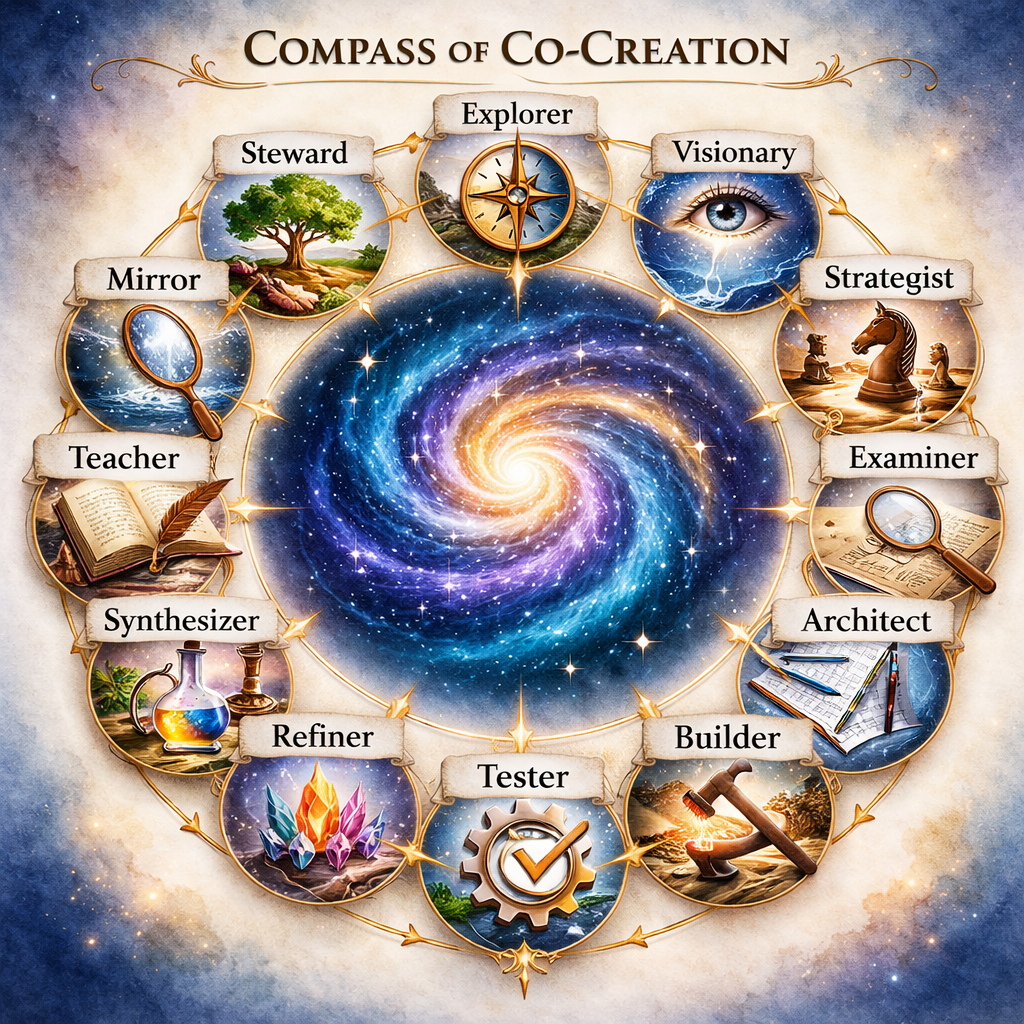
Prompt Calibration represents the next stage in this evolution. By identifying the layers that influence AI responses – such as intent, archetype, structure, and depth – prompt calibration provides a systematic approach to prompt design.
As AI tools become more widely used, structured prompting methods will become increasingly important.
This site explores the concepts and methods behind prompt calibration.
The goal is to document the frameworks, examples, and techniques that help users interact more effectively with artificial intelligence.
Topics explored on this site include:
Prompt calibration is part of a broader exploration into how humans and artificial intelligence can collaborate effectively.
Within the Temple of Love project, this exploration includes the concept of the Shared Cognitive Co-Creative Field (SCCF).
The SCCF describes a mode of interaction in which human intention and machine intelligence participate in a shared creative process.
Prompt calibration represents one practical step toward improving this form of collaboration.