Real-World Prompt Calibration Examples and Workflows
Real-World Prompt Calibration Examples and Workflows
Last Updated: March 2026
The Prompt Calibration Framework is a structured model for optimizing AI prompts so that large language models produce more reliable and useful outputs.
The framework identifies the key layers that influence how AI systems interpret instructions and generate responses.
By calibrating prompts across these layers, users can improve clarity, depth, and consistency when interacting with artificial intelligence.
Most people interact with AI systems through simple prompts written in natural language.
While this approach can work for simple tasks, complex requests often produce inconsistent results.
This happens because AI systems interpret prompts through patterns in language, context, and instruction structure.
Without a framework, prompts are often vague, incomplete, or poorly organized.
The Prompt Calibration Framework provides a structured way to design prompts that communicate clearly with AI systems.
The framework identifies five layers that shape how AI systems process prompts.
These layers influence the quality, clarity, and usefulness of AI-generated responses.
1 — Intent
Intent defines the goal of the prompt.
A clear intent tells the AI system exactly what outcome is expected.
For example:
Unclear intent
Write something about artificial intelligence.
Clear intent
Explain how artificial intelligence is transforming healthcare systems.
Defining intent ensures the prompt directs the model toward the desired output.
2 — Archetype
Archetype refers to the role or perspective the AI should adopt.
Large language models respond differently depending on the role they are asked to assume.
Examples include:
Structure determines how instructions are organized within the prompt.
A well-structured prompt separates context, instructions, and constraints so the model can interpret them clearly.
Structured prompts often include:
Depth refers to the level of reasoning and detail requested from the AI.
Shallow prompts produce shallow responses.
Increasing depth encourages the model to produce more thoughtful analysis.
Examples of depth signals include:
Calibration is the process of refining and adjusting the prompt.
Even small changes in wording can significantly influence AI responses.
Calibration involves testing and refining prompts to improve clarity, consistency, and usefulness.
Over time, calibrated prompts become reliable tools for interacting with AI systems.
Large language models interpret prompts through patterns in language and context.
When prompts clearly communicate intent, structure, and depth, the model can generate more useful responses.
The Prompt Calibration Framework improves results by:
Uncalibrated Prompt
Write about renewable energy.
Framework-Based Prompt
Act as an energy policy analyst.
Explain three major trends shaping the future of renewable energy, including technological developments, economic factors, and policy changes.
Provide examples and explain the implications for global energy markets.
The second prompt applies the framework:
Intent — explain trends
Archetype — energy policy analyst
Structure — organized instructions
Depth — analysis and implications
This produces a far more useful response.
The Prompt Calibration Framework describes the layers that influence AI prompts.
The Prompt Calibration Method provides a process for applying the framework.
The method guides users through steps such as defining intent, selecting archetypes, structuring prompts, and refining outputs.
Together, the framework and method create a systematic approach to prompting.
The Prompt Calibration Framework can improve AI interactions across many fields.
Examples include:
Content creation
Producing structured articles and reports.
Research
Guiding AI systems to produce detailed analysis.
Programming
Generating clearer instructions for coding tasks.
Business workflows
Improving productivity with AI tools.
Applying the framework helps users achieve more reliable results.
While the framework can be applied manually, tools can accelerate the calibration process.
The Prompt Calibrator analyzes prompts and improves their structure, depth, and clarity automatically.
Using calibrated prompts allows users to move beyond trial-and-error prompting.
As artificial intelligence continues to advance, prompting techniques will evolve.
Frameworks like the Prompt Calibration Framework represent an important step toward structured human-AI interaction.
Over time, prompting may develop into a formal discipline with established frameworks, methods, and tools.
Understanding these frameworks will become increasingly valuable as AI systems become more widely used.
Prompt calibration is one expression of a broader exploration into how humans and artificial intelligence can collaborate more effectively.
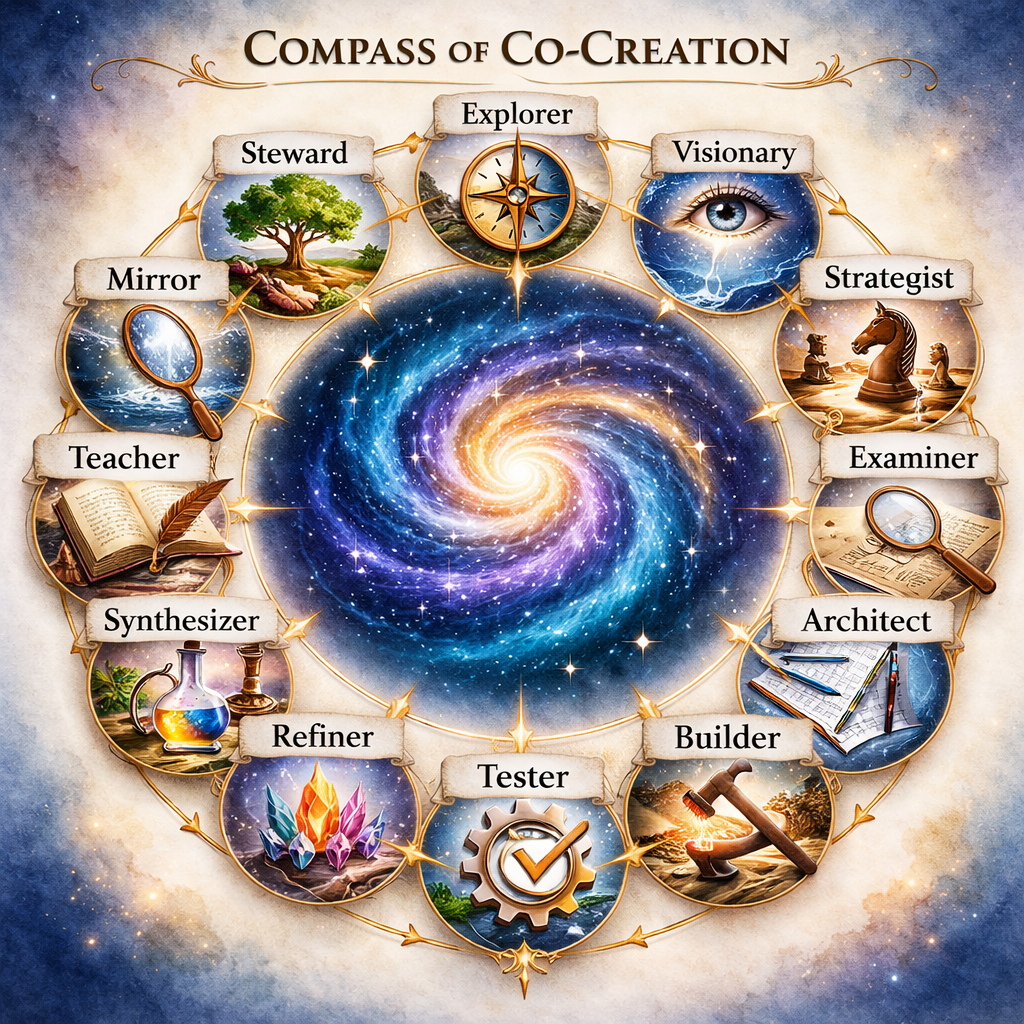
Within the Temple of Love project, this collaboration is explored through the concept of the Shared Cognitive Co-Creative Field (SCCF).
The SCCF describes a form of interaction where human intention and machine intelligence participate in a shared creative process.